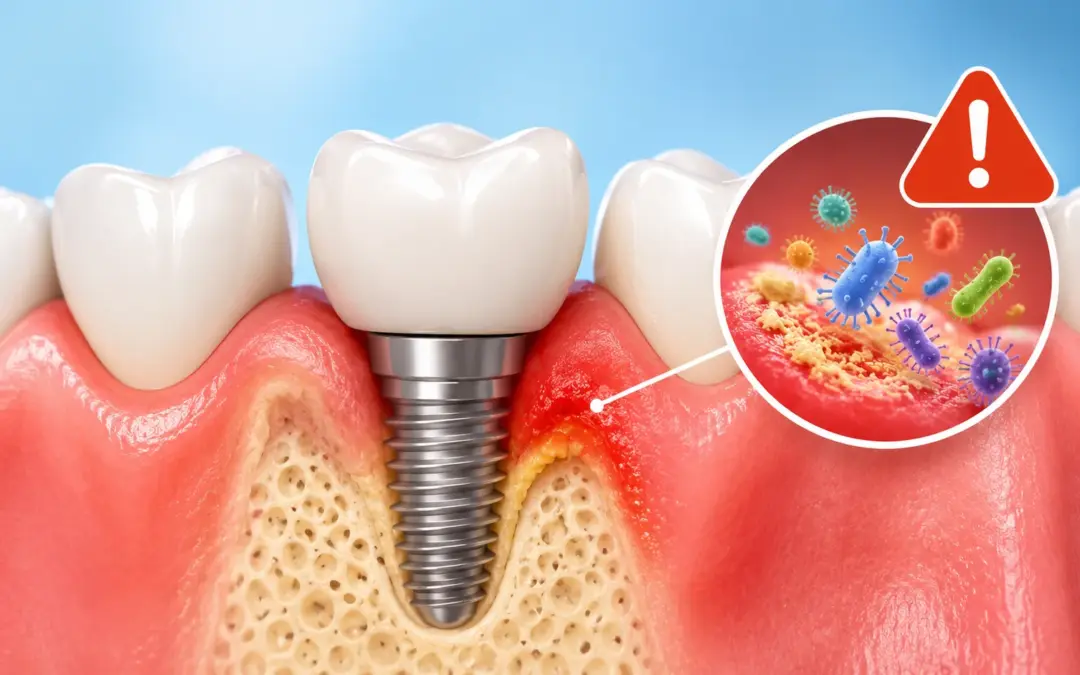
An implant stays put because bone has grown against its surface. Gum disease and dental implants clash at exactly that point, since infection in the gums can travel down and wear the bone away. When this happens around an implant, it is called peri-implantitis. People with a past history of gum disease are more likely to develop it. Many still do well with implants. The condition has to be controlled before surgery, though, and it has to stay controlled.
According to Dr. Glenn Mascarenhas, a leading dentist at Impladent, Dental Clinic in Malad, Mumbai, “A natural tooth is held by a ligament with its own blood supply, which helps it fight infection. An implant has no such ligament, so bacteria reach the bone sooner. Bleeding around an implant should always be reported, even when nothing hurts. Pain tends to show up late.”
What Happens to an Implant When the Gums Are Infected?
It builds up slowly, and the first signs are easy to mistake for sore gums.
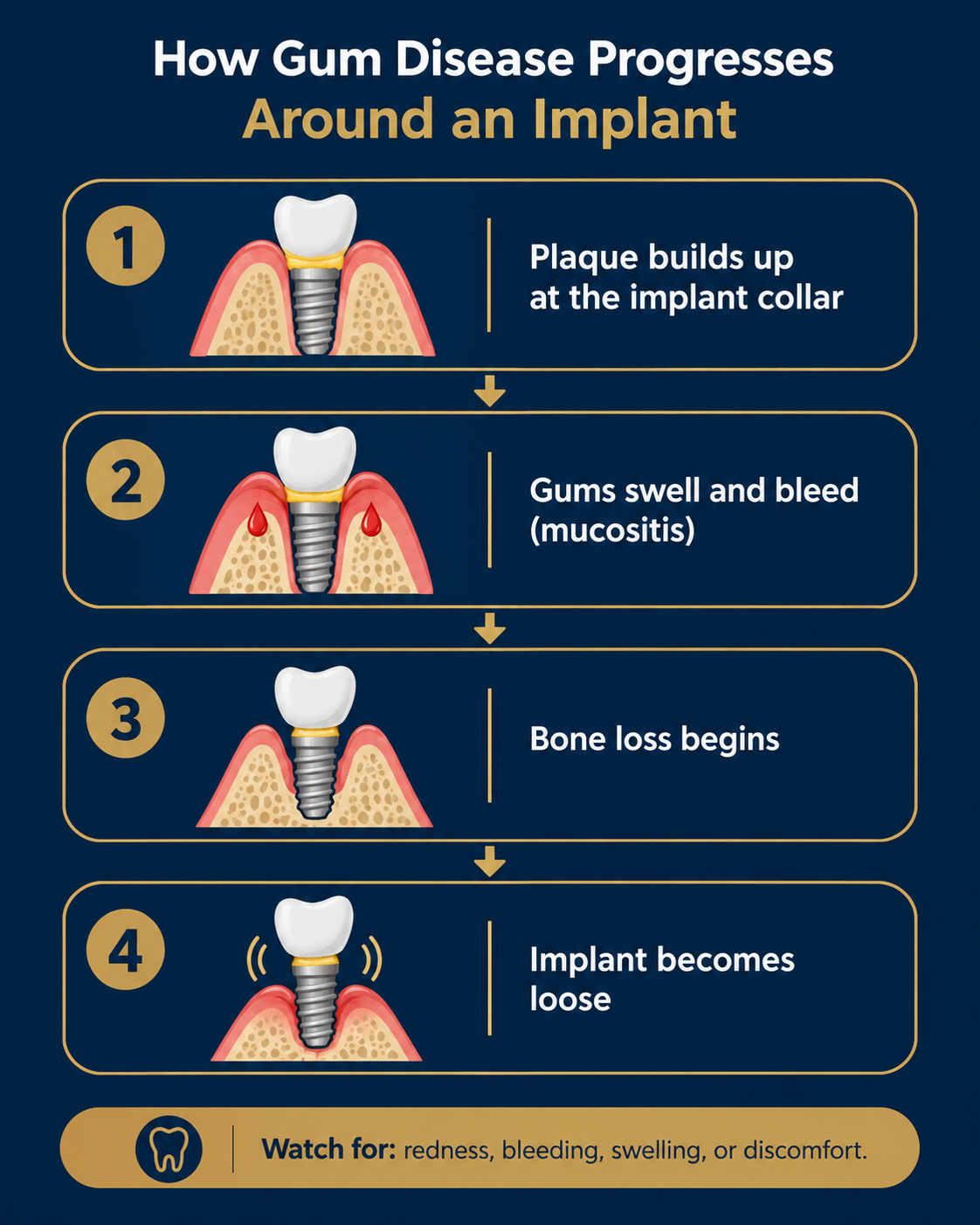
- Plaque buildup: A film of bacteria settles where the gum meets the implant, usually because that spot is hard to reach with a brush. The gum responds with inflammation.
- Peri-implant mucositis: The gum around the implant turns red and swollen, and it bleeds when you brush or floss. The bone underneath hasn’t been touched yet, so thorough cleaning usually brings this stage back to normal.
- Peri-implantitis: This is when the infection starts affecting the bone supporting the implant. Probing often shows pockets deeper than 5 mm, with bleeding, and an X-ray may show bone loss. Most patients feel nothing until the condition has progressed.
- Implant loosening: Left alone, enough bone disappears that the implant begins to wobble. It is then usually removed, and the site needs time to heal, sometimes with bone grafting, before another can be considered.
That is why the gums are measured and a 3D scan is taken before dental implants are planned. So the dentist can assess whether the available gum tissue and bone can adequately support the implant.
What Happens to an Implant When the Gums Are Infected?
In most cases, yes, but only after the infection has been treated. How soon depends on how advanced it is.
| Gum condition | Implant suitability | What comes first |
| Healthy gums | Suitable | Routine check and bone scan |
| Gingivitis | Suitable once treated | Professional cleaning and better home care |
| Periodontitis, controlled | Suitable, with close follow-up | Deep cleaning, then a monitoring period |
| Periodontitis, active | Not yet | Infection treated first; teeth that cannot be saved may be removed |
- Early gum disease: Gingivitis is the easy case. A professional cleaning and better oral hygiene at home usually settles it, and implant treatment can start once the gums stop bleeding.
- Treated periodontitis: Having had periodontal disease in the past still counts. One study of 382 implant patients found that those with gum disease had about three times the odds of peri-implant disease. Their check-ups need to be more frequent.
- Receding gums: Recession alone doesn’t stop an implant. The question is whether there is enough thick, firm gum and bone where the implant would go. If not, a gum graft can be done first.
- Severe gum disease: If teeth are too loose to keep, they come out and the infection is cleared first. Lost bone may need to be rebuilt through bone grafting, which often adds several months before an implant can go in.
Recession often appears well before the more serious damage. Our guide to receding gums treatment goes through what can be done without surgery.
What Else Can Replace Teeth Lost to Gum Disease?
Gum disease can sometimes lead to the loss of several teeth, and then the question becomes what to replace them with. The answer depends on how much bone and healthy gum are left once the infection is under control.
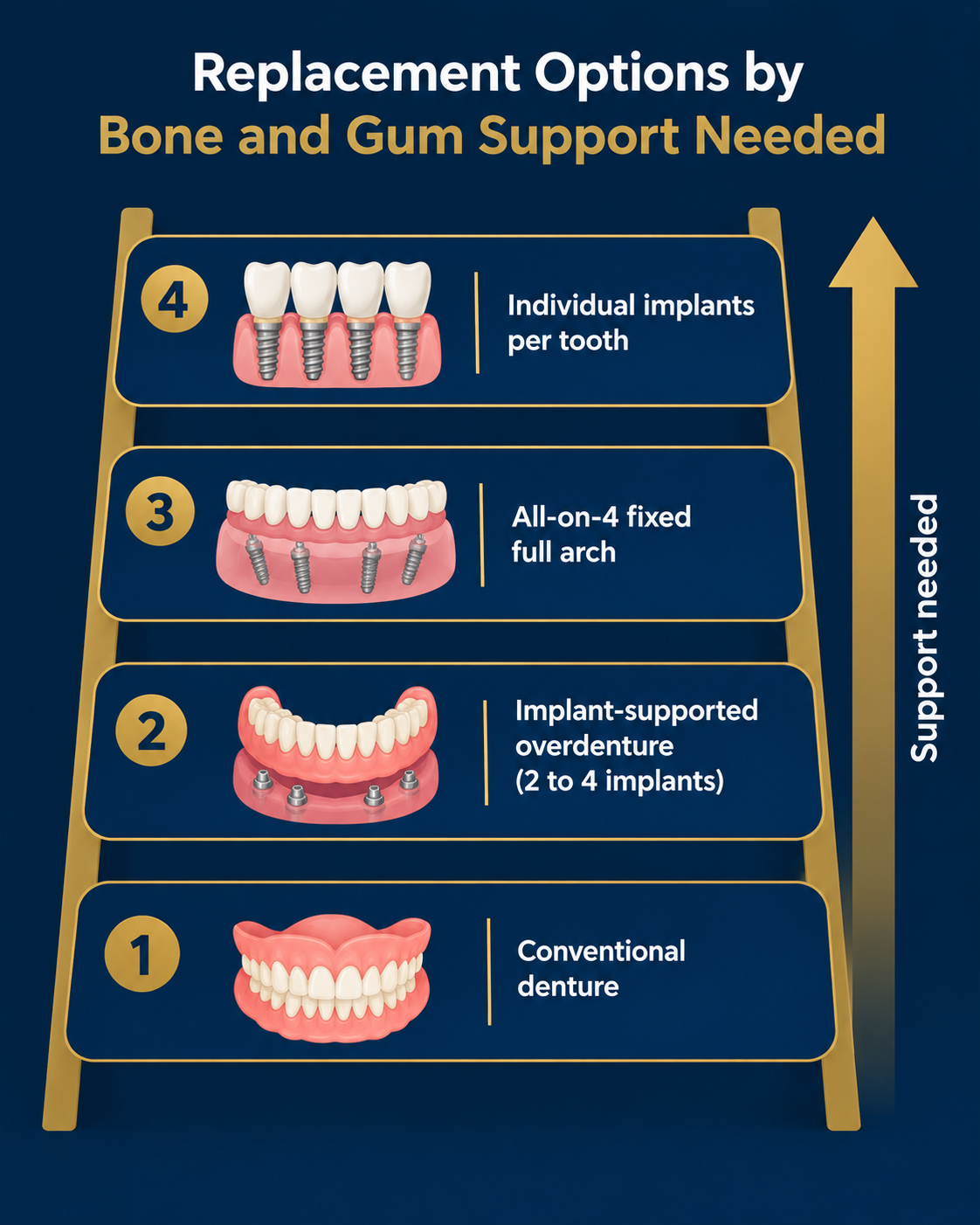
- Conventional dentures: These can be fitted once the gums have been treated, and is the least invasive route. The drawback is that they sit on gum and bone, the disease has already worn down, and the jawbone keeps shrinking under them over the years.
- Implant-supported overdentures: This is a removable denture that clips onto two to four implants, so it doesn’t slide about the way a standard one can. Fewer implants also means less bone is needed.
- All-on-4 implants: A fixed set of teeth sits on just four implants, and the back two are angled so they can use whatever bone is present. It is often considered when bone volume is low, provided the gum infection has been cleared first.
- Fixed bridges: A bridge is supported by the teeth on either side of the gap. If those teeth have gum trouble themselves, they can’t be relied on to carry the load.
A scan of the bone and a gum assessment settle which of these is realistic. For a closer look at how a full arch is planned and placed, see the All-on-4 implants page.
Key Takeaways: Infection in the gums can damage the bone around an implant, and if nothing is done it can end in implant failure. A past history of gum disease does not rule out dental implants, but the gums must be stable first, and cleaning and review visits afterwards largely decide how long the implant lasts. When many teeth are involved, overdentures and full-arch implants are the usual alternatives to loose dentures.
Not sure how your gums would hold up around an implant?
FAQs
Can I have implants if I have gum disease?
Usually, but the infection has to be treated and controlled first.
What does peri-implantitis mean?
Infection around an implant that inflames the gum and wears down the bone.
Can you have dentures with gum disease?
Yes, after treatment. They won’t stop the jawbone from shrinking, though.
Can dental implants be placed if the gums are receding?
Often, yes. A dentist checks how much firm gum and bone remain first.
Disclaimer: This blog is for educational and informational purposes only and should not be considered professional advice.