
Age alone doesn’t settle this. Teeth move because of gentle, constant pressure, and they will do that at 25 or at 65, provided the gums and the bone holding them are sound. That’s why the first thing a dentist checks isn’t your age but the condition of your gums and what the X-rays reveal. Braces for adults are no longer unusual. Treatment may run a little slower than in a teenager, and any gum trouble or cavities get sorted out before a single bracket is fitted.
According to Dr. Glenn Mascarenhas, a leading dentist at Impladent, Dental Clinic in Malad, Mumbai, “Teeth respond to light, steady pressure, and that doesn’t depend on age. What does change with age is the condition of the gums and bone around them. Those need to be healthy before anything is fixed to the teeth. If they are, the number on the birth certificate matters very little.”
How Old Is Too Old for Braces?
There isn’t a cutoff, but each decade brings slightly different things to think about.
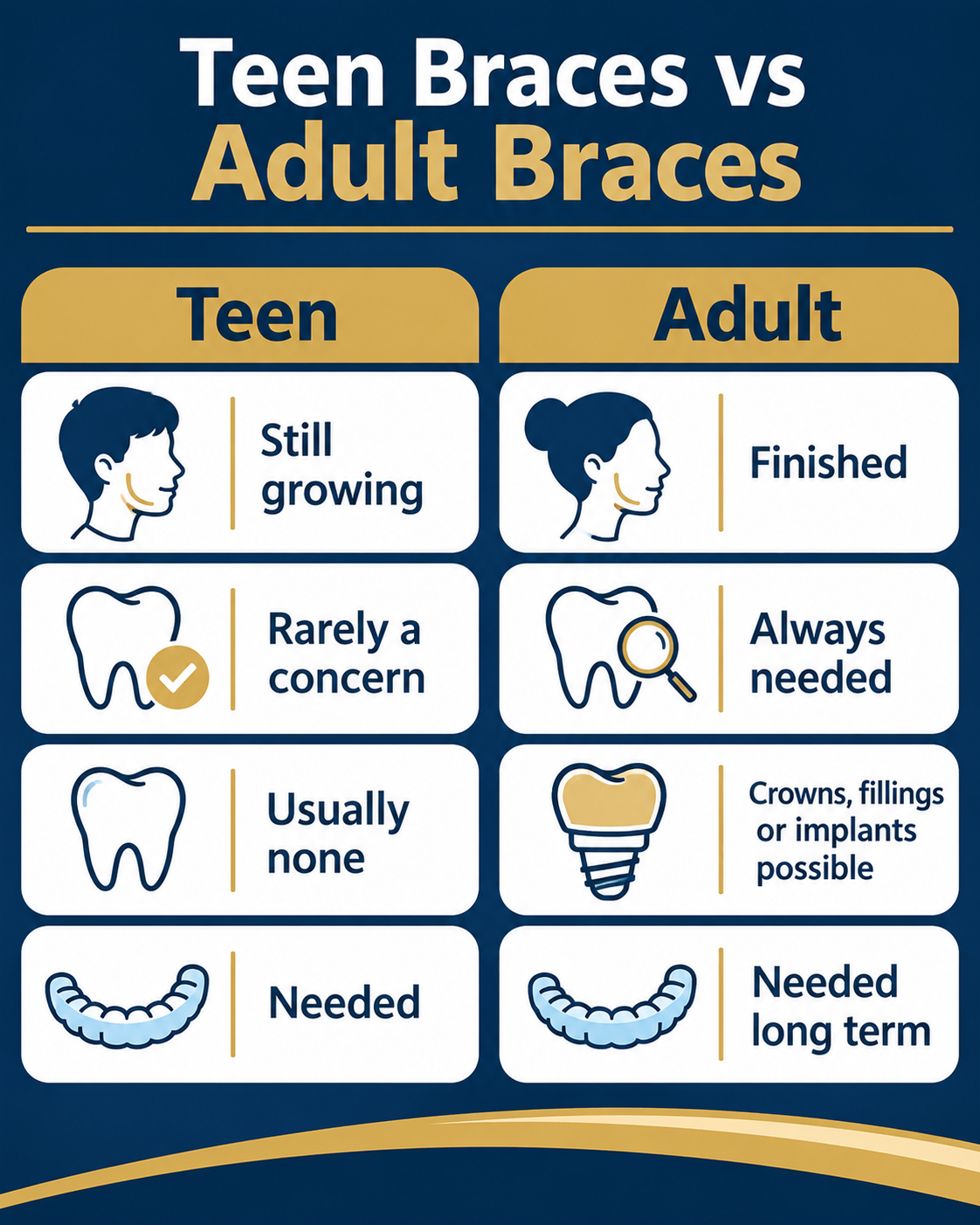
- At 21: Hardly late. Jaw growth has finished by then, so there is nothing to wait for. Treatment can begin once the gums and teeth have been checked.
- At 35: Plenty of people begin around now. What matters most is the condition of the gums and teeth, whether there is any hidden decay, and whether existing crowns or fillings could affect treatment.
- At 40 and beyond: Whether it’s worth it comes down to your reasons. If the teeth are packed so tightly that floss won’t pass, or the bite is wearing enamel down, there’s a real dental case for treatment. Wanting a straighter smile is a good reason too.
- At 60 and over: Age 60 or 70 isn’t a barrier by itself, provided the gums and bone are in reasonable shape. Expect slower progress, and expect questions about your medicines and health history before anything starts.
Whether you’re suitable gets settled at the first visit, with an examination, X-rays and a look at the gums. That is where orthodontic treatment begins.
Can Anything Stop an Adult From Having Braces?
Rarely is it a flat no. More often it’s a “not yet”, until something else has been fixed.
- Active gum disease: Wires and brackets leave plaque more room to settle. If teeth are being moved through gum that is already inflamed, bone can be lost faster than it otherwise would be. Hence the order: gums first, braces once they’ve settled.
- Untreated decay: A cavity under a bracket is hard to see and harder to reach with a brush, so any existing ones are filled before braces go on.
- Very little bone support: Thin bone around the roots doesn’t always rule braces out. It does mean lighter forces, slower movement, and sometimes a more modest end result than the patient first hoped for.
- Some medical conditions and medicines: Some medicines prescribed for bone conditions, and diabetes that isn’t well controlled, can change how the gums heal and how teeth respond to pressure. The treating doctor is consulted first.
People who don’t want visible metal braces often ask about the alternative. Our comparison of Invisalign vs braces sets out when each one suits.
What Extra Challenges Do Adults Face With Braces?
The mechanics are identical at any age. What differs is the condition of the mouth itself, which may have existing dental work, gum issues or other concerns that need to be considered before treatment begins.
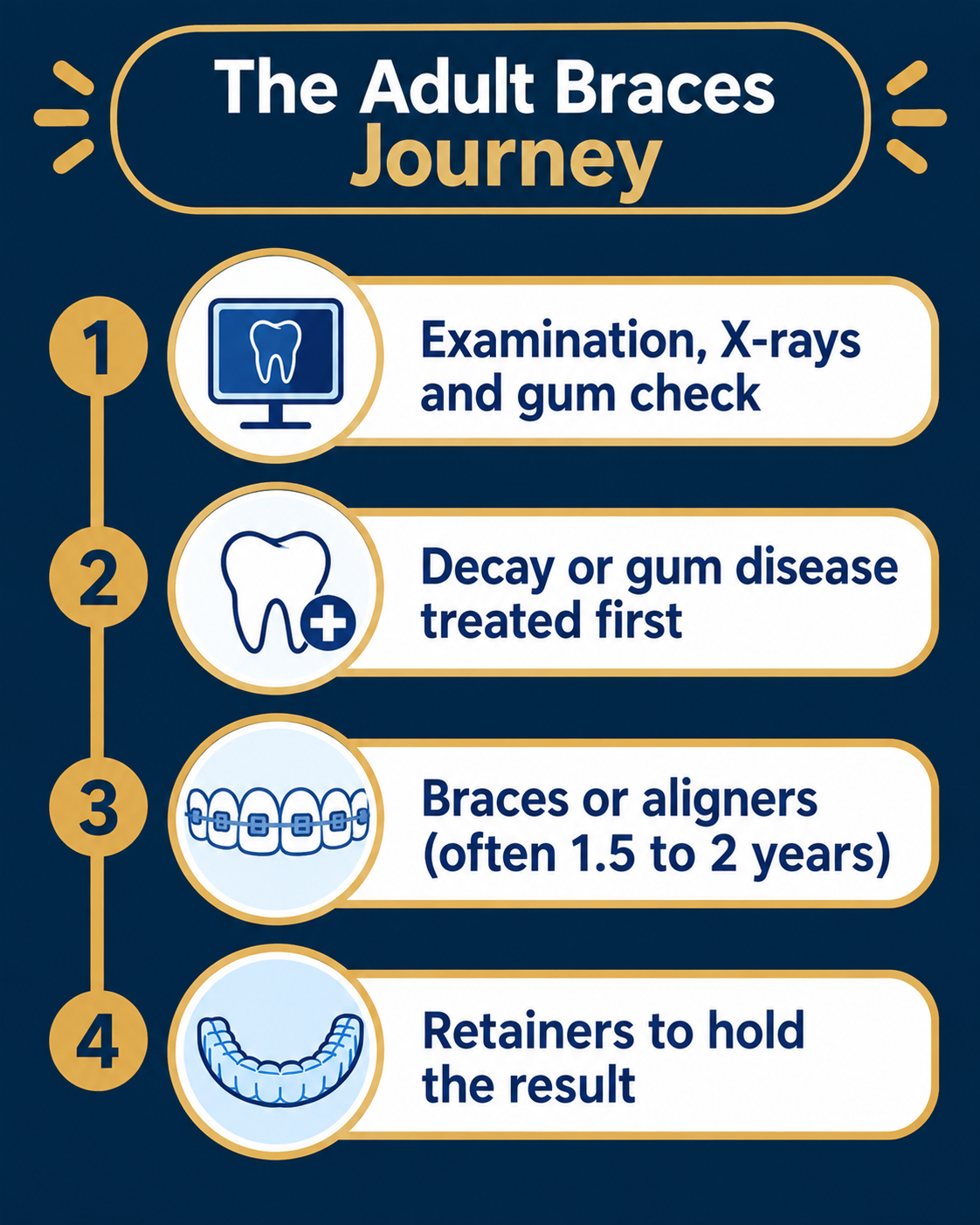
- Slower tooth movement: Adult bone is denser, so it responds to pressure more slowly. Give a teenager and an adult the same crooked teeth and the adult will usually be in braces for longer.
- Cleaning and gum irritation: Brackets trap food, and gums that were already a little sore tend to puff up around them. Interdental brushes help, and so does an extra professional cleaning between adjustment visits.
- Existing dental work: A crown, a bridge or an implant already in the mouth limits what can be moved. Implants in particular stay exactly where they are, so the other teeth are planned around them.
- Teeth drifting back: Leave the retainer off for long enough and the teeth begin to drift. It can take years, which is why people get caught off guard by it.
Retention is the step most people underrate. Our guide to retainers after Invisalign covers how long they’re worn and the types available, and most of it applies after braces too.
Key Takeaways: Braces for adults have no upper age limit. What counts is the state of the teeth, gums and bone, so gum disease and cavities are treated first. Adults should expect treatment to run longer than a teenager’s, and to wear retainers afterwards to prevent relapse.
Unsure whether your gums and jawbone can support braces?
FAQs
Am I too old for braces at 35?
No. Plenty of adults start in their thirties. Gum health matters more than age.
Are braces worth it for someone in their 40s?
Frequently, if teeth are hard to keep clean or the bite makes chewing difficult.
What can disqualify you from having braces?
Usually only active gum disease or untreated cavities, and only until they’re treated.
Which problems are common with braces in adults?
Treatment runs slower, cleaning takes more effort, and retainers are needed long term.
Disclaimer: This blog is for educational and informational purposes only and should not be considered professional advice.