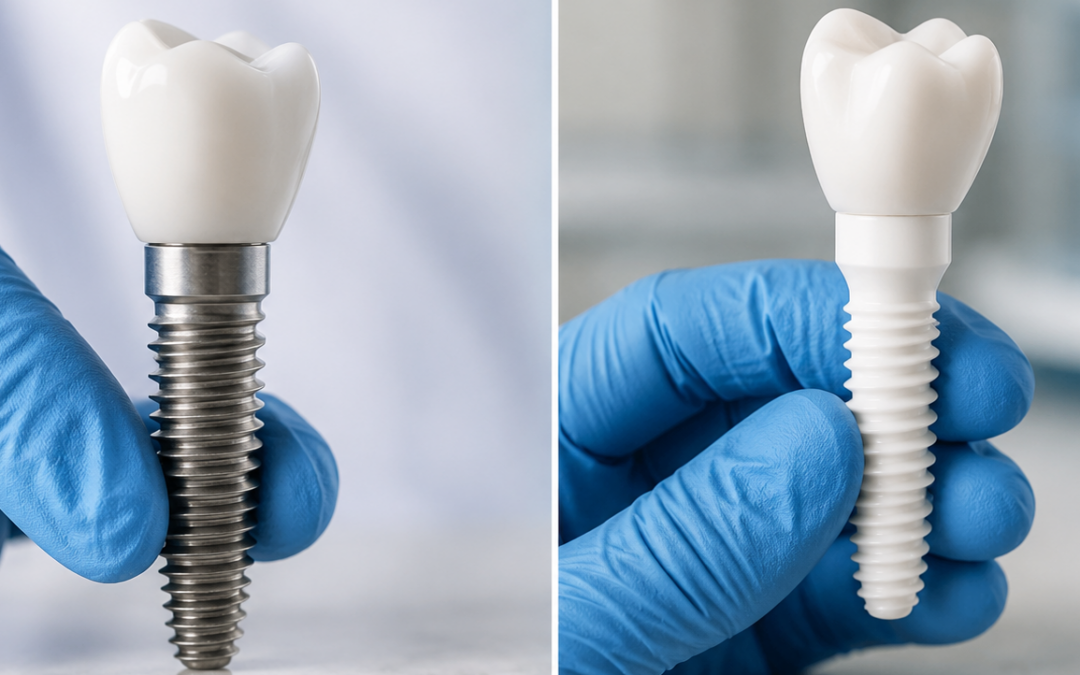
Titanium is a metal alloy. Zirconia, chemically zirconium dioxide (ZrO₂), is a ceramic with no metal in it at all. That single difference is what the whole comparison comes down to. Titanium has been used in implant surgery since the 1960s and nothing has displaced it as the workhorse material. Zirconia came later, picked up by patients who wanted the implant body to stay invisible at the gum line, or who simply did not want metal in their jaw. Both fuse with bone. Which one belongs in a specific patient’s mouth depends on where the tooth is missing, how the bone sits, and what the person actually cares about.
According to Dr. Sonia Butta, Prosthodontist and Implantologist at a leading Dental Clinic in Malad, Mumbai, “Both materials integrate predictably with the bone. The decision comes down to the patient’s anatomy, the position of the implant, and how important the gum-line appearance is to them. There is no universal answer. Each case tells you which material it needs.”
Zirconia vs Titanium Dental Implants: Key Differences?
The table below shows where the two materials actually differ when a case is being planned. For the full range of implant options available, see dental implants in Malad, Mumbai.
Feature | Titanium | Zirconia |
Track record | 50+ years clinical data | Shorter, growing evidence base |
Osseointegration | Proven, well-documented | Comparable in RCT studies |
Aesthetics | Grey metal visible at gum line | Tooth-coloured, better in aesthetic zone |
Metal sensitivity | Small risk in sensitive patients | Metal-free, suitable for allergies |
Design flexibility | One-piece and two-piece available | Predominantly one-piece |
Fracture resistance | High | Lower, improving with newer ceramics |
What Else Should You Know Before Deciding?
Placement site decides the material, not personal preference. Front teeth need a tooth-coloured body. Titanium shows grey at the gum margin. Back teeth need bite strength, and titanium wins there too.
One-piece design limits zirconia in complex cases. Titanium’s two-piece system lets the surgeon adjust angles at placement. Zirconia is fixed. Bone grafting or sinus lift cases need that flexibility.
Metal sensitivity is rare, but zirconia removes the question. True titanium allergy is uncommon. For patients with confirmed sensitivities, zirconia is a sound metal-free alternative with comparable osseointegration.
Both materials bond with bone at similar rates. Survival rates are comparable in clinical data. The real difference is aesthetics and surgical flexibility, not how well the implant fuses.
For a full picture of the procedure, read our earlier post on whether dental implants are painful.
Why Choose Impladent® Dental Clinic?
Dr. Glenn Mascarenhas founded Impladent® in 1982 after training at King’s College London, where he completed his Master of Clinical Dentistry in Prosthodontics with distinction. Dr. Sonia Butta followed the same programme at King’s and has been at the clinic since 1999. Together they have placed implants across the full range of complexity, from single-tooth cases to full-arch reconstructions using both titanium and zirconia systems. Before any material decision is made, every patient goes through CBCT imaging and a written treatment plan. Nothing gets assumed. The anatomy tells you what it needs.
Restore Your Smile with Advanced, Minimally Painful Dental Implants If You Want to know whether zirconia or titanium dental implants are right for you.
FAQs
Which lasts longer, zirconia or titanium implants?
Titanium has 50+ years of clinical data. Zirconia survival rates are comparable short-term, but long-term data is still building.
Are zirconia implants better for front teeth?
Often yes. The tooth-coloured body avoids the grey tint titanium can show through thin gum tissue at the smile line.
Can I get zirconia implants if I have bone loss?
Depends on severity. Zirconia is mostly one-piece with limited angle adjustment. Significant bone loss cases are better handled with titanium plus bone grafting.
Is titanium safe for patients with metal allergies?
For almost all patients, yes. True titanium allergy is rare. Those with confirmed sensitivities have a reliable alternative in zirconia.
References
- Comparative Clinical Behavior of Zirconia versus Titanium Dental Implants: A Systematic Review and Meta-Analysis — PMC: https://pmc.ncbi.nlm.nih.gov/articles/PMC11313197/
- Clinical Performance of Zirconia Implants Compared to Titanium Implants: A Systematic Review and Meta-Analysis of RCTs — PMC: https://pmc.ncbi.nlm.nih.gov/articles/PMC10026713/