Not every patient getting an implant in the upper jaw needs a sinus lift. The procedure only comes into play when the maxillary sinus sits too close to where the implant has to go, leaving too little bone to work with. A CBCT scan is what actually answers this question, not guesswork or age alone. For many patients, the natural bone is enough. For others, lifting the sinus floor first is what makes a stable implant possible at all.
According to Dr. Glenn Mascarenhas, Implantologist and Prosthodontist at a leading Dental Clinic in Malad, Mumbai, “People hear sinus lift and panic. It’s just bone augmentation in a different location. The sinus floor is a thin bone, not a wall. Lift it, graft it, wait for it to heal. Then the implant goes in like any other case. Skipping this step where it’s needed is what actually causes failures, not the procedure itself.”
When Does an Implant Actually Need a Sinus Lift?
Bone loss in the upper back jaw isn’t unusual. Here’s what pushes a case toward augmentation.
Missing molars for years: Bone resorbs quickly once a back tooth is gone, and the sinus tends to expand downward to fill the space.
Bone height under 6mm: Below this, most implant systems don’t have enough anchorage without added height.
Sinus pneumatization: Some patients are simply built with a sinus that sits lower than average. No extraction involved, just anatomy.
Long-term denture wear: Extended denture use accelerates bone loss underneath the appliance, often more than people realize.
Not sure where your case stands? A CBCT scan during your implant consultation settles it in minutes.
What Does the Sinus Lift Procedure Actually Involve?
The process sounds bigger than it is. Two approaches cover most cases.
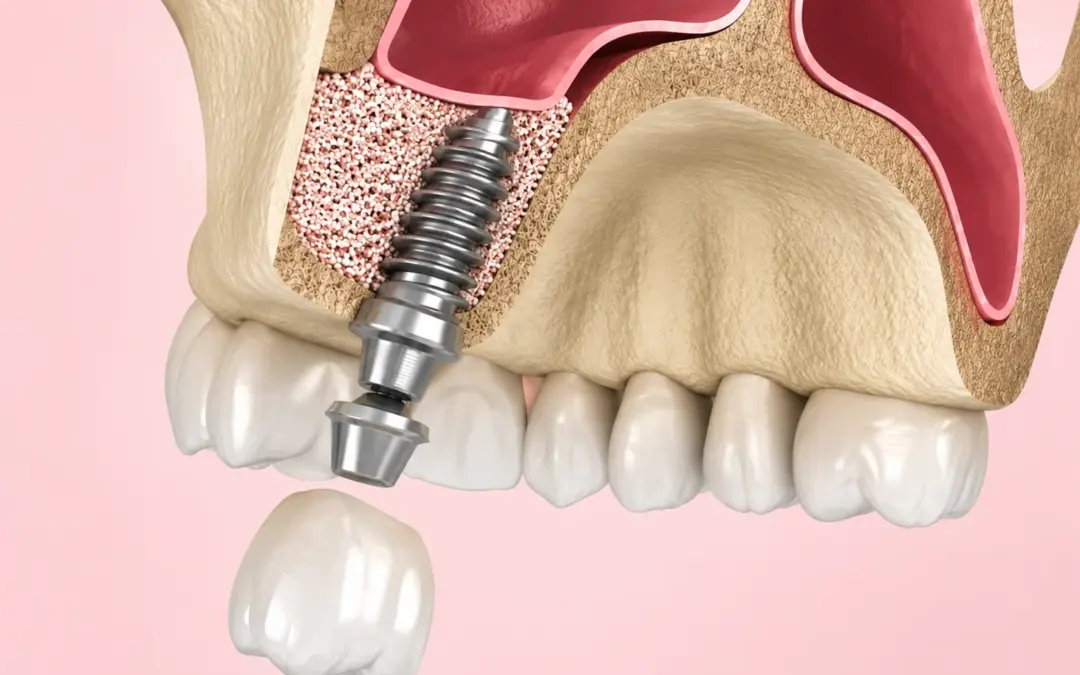
Lateral window technique: Used when bone height is very low, a small opening is made in the sinus wall to place graft material directly.
Crestal (osteotome) approach: For milder shortfalls, the lift happens through the implant site itself, often in the same sitting as placement.
Graft healing time: Four to nine months, depending on how much height was needed and the graft material used.
Implant timing: Sometimes placed the same day as the lift. Sometimes after healing. Depends on the starting bone.
Sinus lifts are one form of bone augmentation. Our piece on bone grafting covers the other situations where it’s needed.
Why Choose Dr. Glenn Mascarenhas for Sinus Lift & Implant Placement?
Dr. Glenn Mascarenhas has been placing implants since 1982, long before sinus lifts were standard practice in Indian implant dentistry. He holds a Master of Clinical Dentistry in Prosthodontics from King’s College London, earned with distinction. His training in oral implantology in Germany and Holland covered sinus augmentation techniques directly. Dr. Sonia Butta, also MClinDent qualified, handles sinus grafting and prosthetic planning alongside him. Every sinus lift case starts with a CBCT scan and a written plan, not an assumption.
Getting the graft technique right for the amount of bone actually present is what determines whether the implant holds long term. Impladent’s in-house digital workflow means the scan, the plan, and the surgery happen without shuffling between clinics. Patients get a clear timeline upfront, so there’s no surprise about healing time before the implant stage.
A scan tells you what your bone actually looks like. Guessing doesn’t.
FAQs
Is All-on-4 or All-on-6 better?
Neither is universally better. Bone volume and bite load decide which suits you.
Can I get teeth the same day with All-on-6?
Yes. Both All-on-4 and All-on-6 support same-day provisional teeth in most cases.
Does All-on-6 need bone grafting?
Sometimes. More implants need more bone. A CBCT scan confirms whether grafting is needed.
How long do All-on-4 implants last?
With proper care, All-on-4 implants are designed to last a lifetime.
References
- 15-Year Retrospective Study on Maxillary Sinus Augmentation Success – PMC: https://www.ncbi.nlm.nih.gov/pmc/articles/PMC9970713/
- Survival Rate of Dental Implants Placed Using Sinus Floor Elevation Techniques: A Systematic Review – PMC: https://pmc.ncbi.nlm.nih.gov/articles/PMC9416960/
Disclaimer This content is for educational purposes only. Consult a qualified implantologist for an accurate evaluation and personalised treatment plan.