

Blood in the sink after brushing isn’t normal. Doesn’t matter if it happens most days, it’s still not something to ignore. Sometimes it’s mild inflammation, nothing more. Other times it’s the start of something that needs real treatment. One occurrence tells you almost nothing on its own. Frequency matters. So does how much blood you’re actually seeing. A dental check answers that question far quicker than watching and waiting at home.
According to Dr. Glenn Mascarenhas, a leading dentist at Impladent, Dental Clinic in Malad, Mumbai, “Patients wait months before mentioning bleeding gums. They just assume it’s from brushing too hard. Sometimes that’s true. More often it’s gingivitis quietly building up. Left alone, it doesn’t stay quiet forever.”
What Causes Bleeding Gums When Brushing?
A handful of factors keep showing up in these cases, again and again.
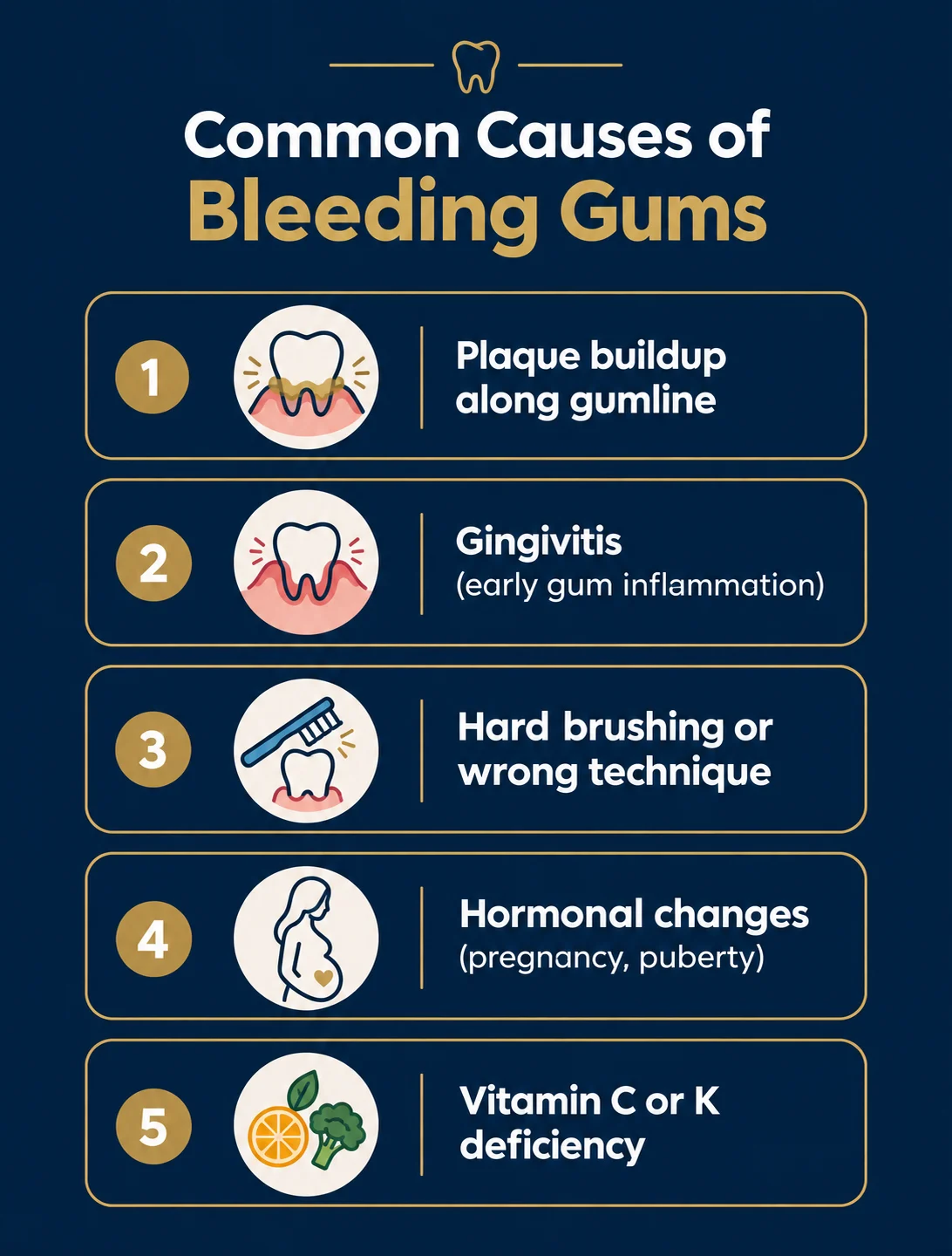
Plaque sitting along the gumline is behind most of it. Rarely the only cause, though. Brushing technique matters just as much, honestly. A heavy hand with a stiff-bristled brush can do nearly as much harm as not brushing at all. Then there’s hormones. Pregnancy, puberty, certain medications, all of these can make gums flare up over plaque that never caused trouble before. None of it looks quite the same once a dentist actually examines it. Which is exactly why a quick exam beats sitting around guessing.
Left untreated long enough, gum infection can spread deeper and reach the tooth itself, sometimes needing root canal treatment to save it.
Bleeding Gums Causes and Treatment: What Helps?
Depends entirely on how far things have gone. Not every case calls for the same fix.
Professional cleaning (scaling): Gets rid of hardened plaque and tartar below the gumline, spots a toothbrush just can’t reach.
Better home care: A softer brush and correct technique reduce irritation without leaving plaque behind.
Antiseptic rinse: Helps calm inflammation while healing happens. Meant to be short term, not a standalone fix.
Deeper periodontal therapy: Comes in once pockets have formed. At that stage, cleaning and good habits alone aren’t enough.
Gum disease rarely stays confined to the gums. Ignore it long enough and it reaches the bone underneath. Our piece on bone loss from gum disease walks through exactly how that happens.
Why Choose Dr. Glenn Mascarenhas for Gum Health and Periodontal Care?
Dr. Glenn Mascarenhas has treated gum and periodontal conditions in Malad for over four decades now. A graduate of Government Dental College, Bombay, he later earned a Master of Clinical Dentistry in Prosthodontics from King’s College London, with distinction. For him, gum health isn’t an afterthought, it’s where every other dental treatment starts. Issues get caught early through careful diagnosis instead of waiting around for symptoms to get worse. Patients know exactly what’s going on with their gums before any treatment gets suggested.
Seen blood in the sink more than once this week? Get your gums checked. Don’t just guess.
FAQs
Is it normal for gums to bleed a little every time you brush?
Not really. Bleeding during normal brushing usually points to inflamed gums.
Can bleeding gums heal on their own?
Sometimes. Better brushing and regular flossing clear up mild cases.
Does bleeding gums mean I have gum disease?
Not automatically. Think of it more as an early red flag.
When should I see a dentist for bleeding gums?
Two weeks of better oral hygiene with no change, time to get checked.
References
- Periodontal Disease and Its Association with Bleeding on Probing: A Clinical Review — PMC: https://pmc.ncbi.nlm.nih.gov/articles/PMC9327471/
- Gingivitis: Clinical Features, Pathogenesis, and Treatment — NIH: https://www.ncbi.nlm.nih.gov/books/NBK557422/
Disclaimer: This content is for educational purposes only and does not replace professional dental advice or diagnosis.