
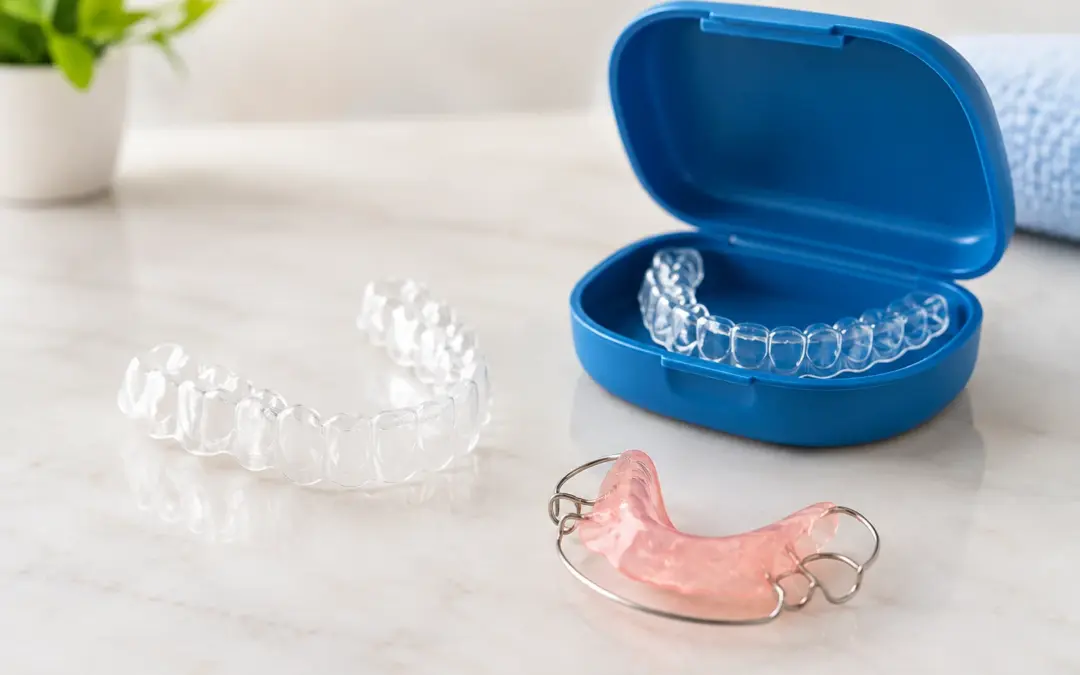
Completing Invisalign treatment doesn’t mean the retention phase is over, it just shifts into a different routine. Most patients wear their retainer nearly full-time for the first few months after treatment, typically the first 3 to 6. After that window, wear usually drops to nights only, but it doesn’t stop altogether. Skipping this step is one of the most common reasons teeth drift back after Invisalign.
According to Dr. Glenn Mascarenhas, a leading dentist at Impladent, Dental Clinic in Malad, Mumbai, “Patients complete their Invisalign treatment and think the work is done. It’s not, not quite. Teeth remember where they used to be, and they’ll drift back if given the chance. The retainer is what stops that. Skip it for a few weeks, and you’ll feel the difference before you see it.”
How Long Do You Actually Need to Wear a Retainer After Invisalign?
The timeline isn’t identical for everyone, but a general pattern holds.
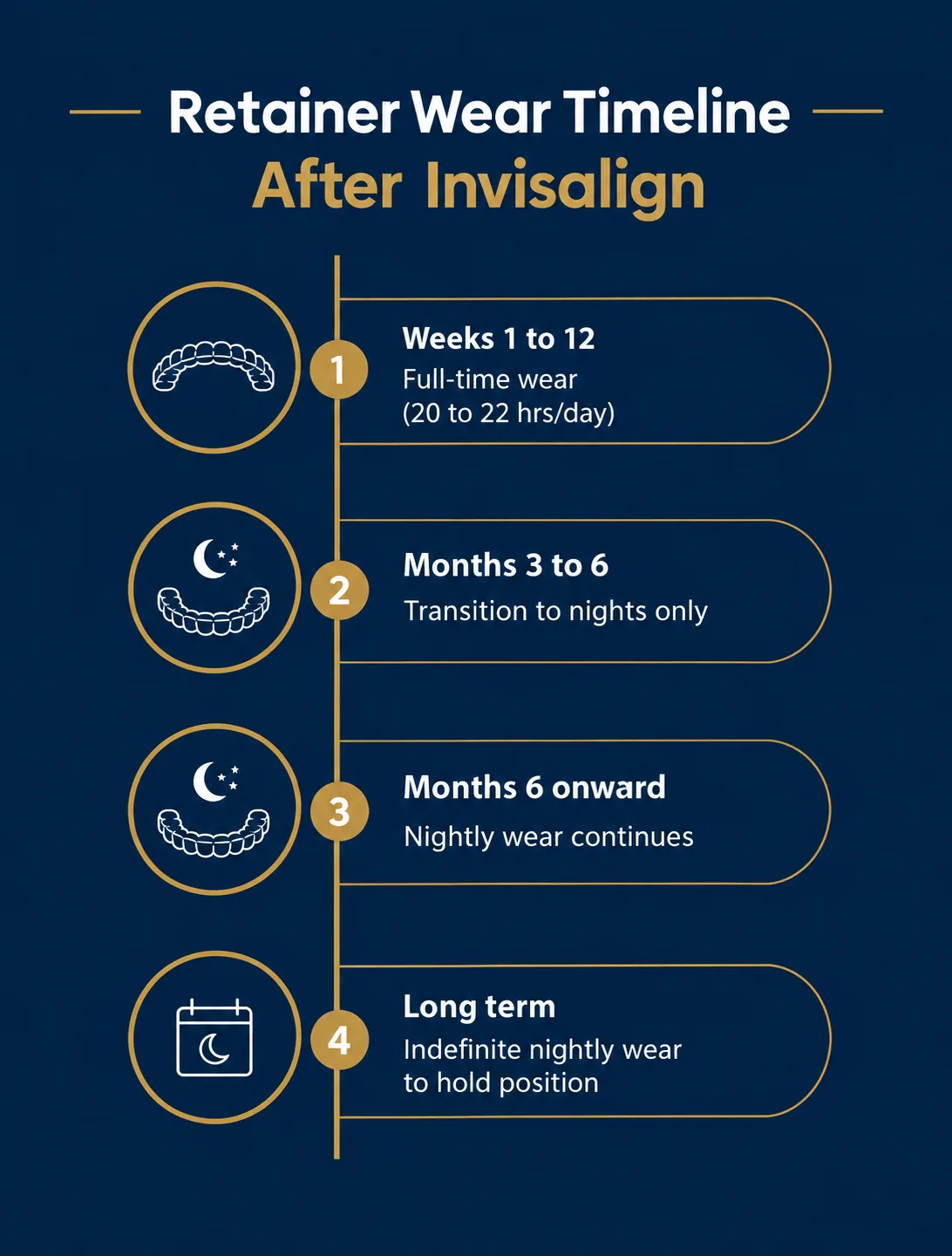
There isn’t a fixed date when full-time wear ends and nightly wear begins. The transition depends on how well the teeth are holding their new position at each follow-up visit. Some patients get cleared for nights only within three months, others need longer if the bite hasn’t fully stabilized. What doesn’t change is the long-term part. The periodontal ligament holding each tooth in the jaw never becomes fully rigid, so teeth remain capable of shifting throughout life. That’s why nightly retainer wear is meant to continue rather than taper off after a set period.
Not sure where you are in that timeline? An orthodontic treatment review can confirm what your retainer schedule should look like now.
What Do Retainers After Invisalign Actually Look Like?
They’re not all built the same, and the type you get affects how long it holds up.
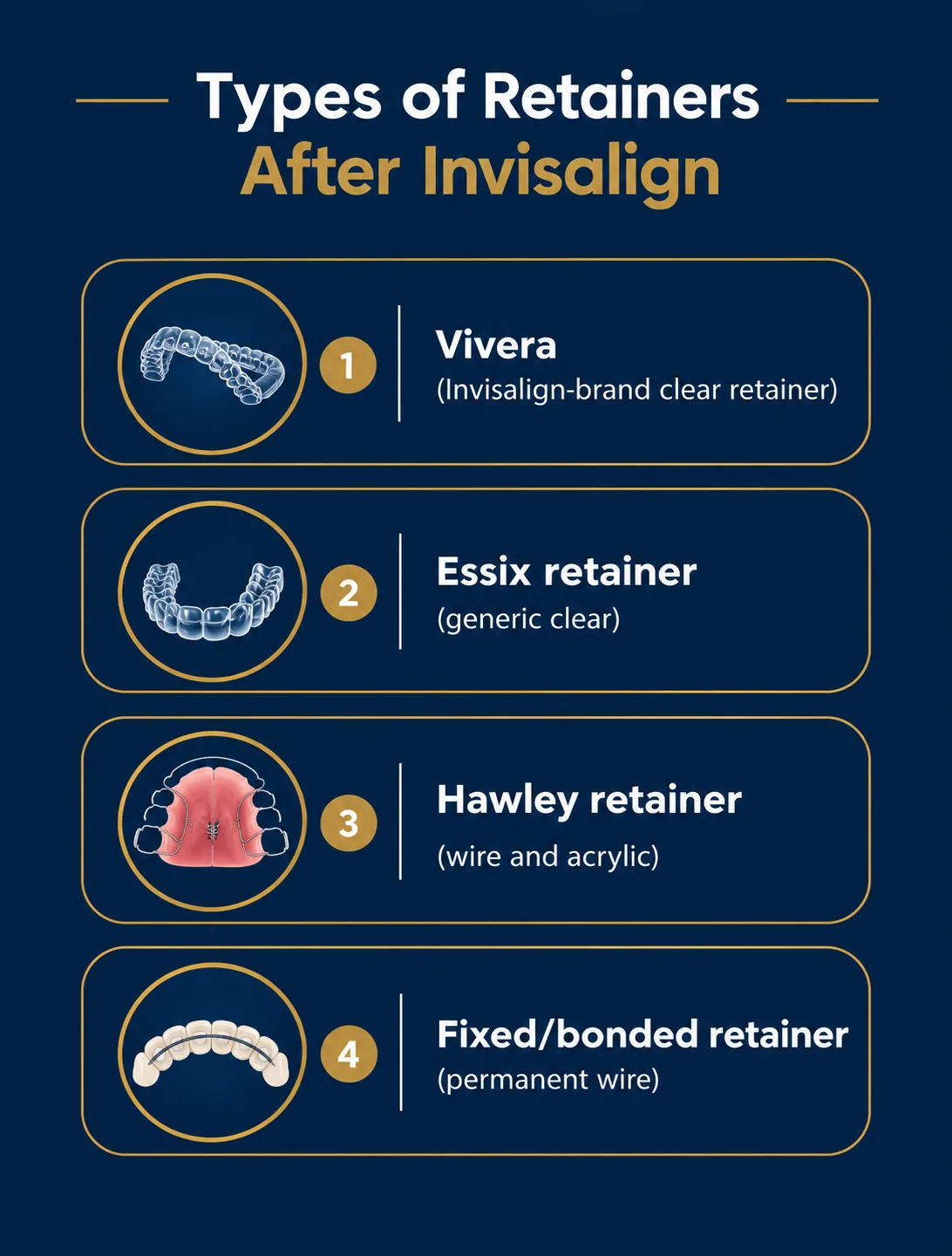
Vivera retainers: Invisalign’s own version, a bit thicker than the actual aligners were. Most people swap these out every 6 to 12 months.
Essix retainers: Looks nearly identical to Vivera, generic brand though. Cheaper upfront, but tends to wear out faster with daily use.
Hawley retainers: Wire and acrylic, built to last and easy to adjust. More visible in the mouth than the clear versions.
Fixed retainers: A thin wire glued behind the front teeth. Stays there permanently, no taking it out to eat or brush.
Choosing the right retainer type often comes down to how the aligners themselves worked for you. Our piece on Invisalign vs braces covers what to expect from the aligner phase itself.
Why Choose Dr. Glenn Mascarenhas for Invisalign and Retainer Care?
Dr. Glenn Mascarenhas has overseen orthodontic and Invisalign cases in Malad for decades, including the retention phase most clinics treat as an afterthought. He holds a Master of Clinical Dentistry in Prosthodontics from King’s College London, earned with distinction, and checks retainer fit and wear schedule at every follow-up, not just at the end of active treatment. Patients get a retention plan built around how their teeth are actually holding position, not a generic handout.
Stopped wearing your retainer a few weeks ago? Here’s what that gap could already be costing you.
FAQs
When can I stop wearing my retainer after Invisalign?
Realistically, never. Nightly wear is meant to continue for life.
Can I go 2 hours without my retainer?
Once in a while, sure. Make it a habit, and teeth start moving.
Do I have to wear a retainer forever after Invisalign?
Pretty much, yes. That’s what keeps the results from reversing.
How often should I wear my retainer after treatment?
Full-time at first, usually for a few months, then just at night going forward.
References
- Patient Compliance with Removable Orthodontic Retainers During Retention Phase: A Systematic Review — Taylor & Francis: https://www.tandfonline.com/doi/full/10.1080/19424396.2023.2243016
- Evaluation of Relapse with Thermoplastic Retainers Equipped with Microsensors — PMC: https://pmc.ncbi.nlm.nih.gov/articles/PMC9020389/
Disclaimer: This content is for educational purposes only and does not replace professional dental advice or diagnosis.