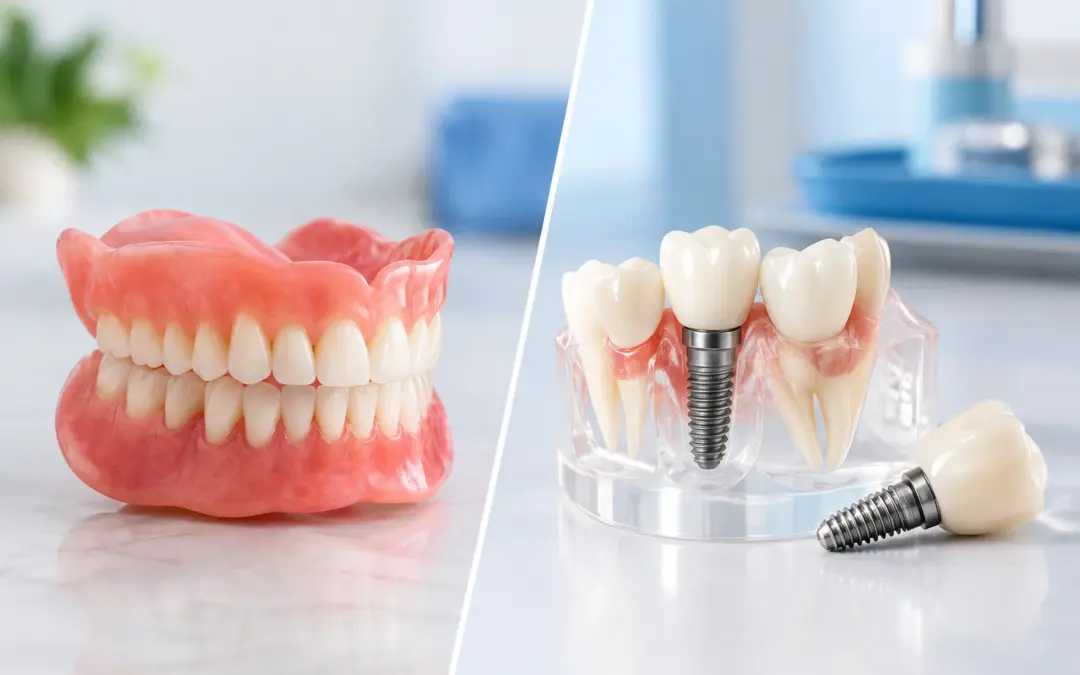
Dentures and implants both replace missing teeth. That’s about where the similarity ends. A titanium implant post fuses with the jawbone and can keep working for two decades or more, sometimes for life, if it’s looked after properly. Dentures run on a much shorter clock. They need relining every couple of years and a full remake well before an implant ever asks for one. Stretch the timeline out far enough, and the gap between the two only gets wider.
According to Dr. Glenn Mascarenhas, Implantologist and Prosthodontist at Impladent, a leading Dental Clinic in Malad, Mumbai, “Patients ask which option lasts longer, and the difference is significant. Dentures wear down, shift, need relining every few years. An implant, placed correctly, can function for decades, often the rest of a patient’s life. That’s just what the bone and titanium actually do over time.”
How Long Do Dental Implants Actually Last?
The numbers here come from real data, not a sales brochure.
- Titanium implant post: Fuses with the jawbone through osseointegration. Can keep functioning for 20 to 25+ years, often a lifetime, with proper care.
- Crown replacement: The crown on top wears down eventually, usually needing a swap every 10 to 15 years. The post underneath just stays put.
- Bone preservation: An implant stimulates the jawbone almost the way a natural root does. That’s a big reason it lasts as long as it does.
- Daily maintenance: Brush, floss, show up for checkups, same as with natural teeth. No adhesive, no soaking overnight, nothing extra to remember.
Curious whether your jawbone and gum health qualify you for dental implants? A consultation settles that quickly.
Dentures vs Dental Implants: How Do the Numbers Compare?
Lifespan is one piece of this. Cost and upkeep fill in the rest.
Factor | Dentures | Dental Implants |
Average lifespan | 5 to 8 years | 20 to 25+ years |
Relining or adjustment | Every 2 to 3 years | Rarely needed |
Effect on jawbone | Bone keeps shrinking | Bone stays stimulated |
Daily upkeep | Removal, soaking, adhesive | Brush and floss like natural teeth |
- Upfront cost: Dentures are cheaper to start. Add up relining and replacement over 20 years, though, and implants often come out ahead.
- For elderly patients: Dentures make sense for lower bone density or anyone who’d rather skip surgery. Implants need enough jawbone in place first.
- Single tooth replacement: One missing tooth, and an implant usually beats a bridge or partial denture over time, no reliance on neighboring teeth needed.
- Why some dentists lean toward implants: They keep the jawbone stimulated and feel closer to a real tooth. Dentures aren’t wrong, just more of a tradeoff long term.
Cost is usually what tips the decision for most patients. Our piece on dental implant cost breaks down what actually goes into that number.
Why Choose Dr. Glenn Mascarenhas for Dental Implants?
Dr. Glenn Mascarenhas has treated gum recession and periodontal cases across Malad for over four decades now. He holds a Master of Clinical Dentistry in Prosthodontics from King’s College London, earned with distinction. Every case gets checked for bone density and long-term suitability before implants get recommended over dentures, not the other way around. Patients walk away with a comparison based on their oral condition, not a default answer.
Wondering if your denture will outlast a dental implant? It won’t, and here’s the actual timeline.
FAQs
Which is better, permanent dentures or implants?
Implants tend to last longer and feel closer to natural teeth over time.
Are dentures better now than 20 years ago?
Materials have improved, sure, but the basic lifespan gap hasn’t really closed.
What happens after 20 years of dental implants?
Most posts are still going strong, though the crown may need replacing.
Why do dentists sometimes discourage dentures?
They don’t stop jawbone loss the way an implant does.
Disclaimer: This content is for educational purposes only and does not replace professional dental advice or diagnosis.